
Home / Cigar 101
Cigar 101
Everything you need for your first — or fiftieth.
No snobbery, no jargon you can’t decode. This is the guide our team gives to friends who ask where to start — and a refresher for the regulars.
01 · Anatomy
What you’re holding.
Every premium cigar is three layers of leaf, rolled by hand.
- 1Footwhere you light it
- 2Bodywrapper, binder and filler
- 3Bandtells you who made it
- 4Headthe end you draw on
- 5Capclip just a sliver
The outermost leaf — the prettiest and most expensive. It adds much of the aroma and a good share of the flavor.
A sturdy leaf that holds the filler together and helps the cigar burn evenly.
The heart of the blend: leaves from different farms and harvests that set the strength and complexity.
02 · Shapes
Size changes the smoke.
Length is in inches; ring gauge is the diameter in 64ths of an inch. Thicker cigars smoke cooler and slower; slimmer ones concentrate the wrapper’s flavor. Here are seven classics, drawn to scale.
Short on time? A corona or robusto takes about 45–60 minutes. A Churchill can run 90 minutes or more.
03 · Wrappers
Read the color.
Wrapper color hints at flavor: lighter leaves tend to be milder and creamier, darker ones richer and sweeter. It doesn’t set the strength — that comes mostly from the filler.
04 · Strength vs body
Two words that aren’t the same.
Strength
How much of a punch it packs — mostly nicotine. A strong cigar on an empty stomach can make you light-headed, so start mild and eat first.
Body
How rich and dense the flavor feels — like the difference between a light roast and an espresso. A cigar can be full-bodied but only medium in strength.
New to cigars? Ask for something mild-to-medium with a Connecticut or Ecuadorian shade wrapper. We’ll steer you right.
05 · How to smoke
Cut. Toast. Light. Relax.
- ✂️
Cut
Clip the cap just above where it meets the body — a sliver, not a chunk. A straight cut, a punch or a V-cut all work.
- 🔥
Toast
Hold the foot just above a soft flame or cedar spill and rotate it until the edge glows evenly. Don’t let the flame touch the leaf.
- 🌬️
Light
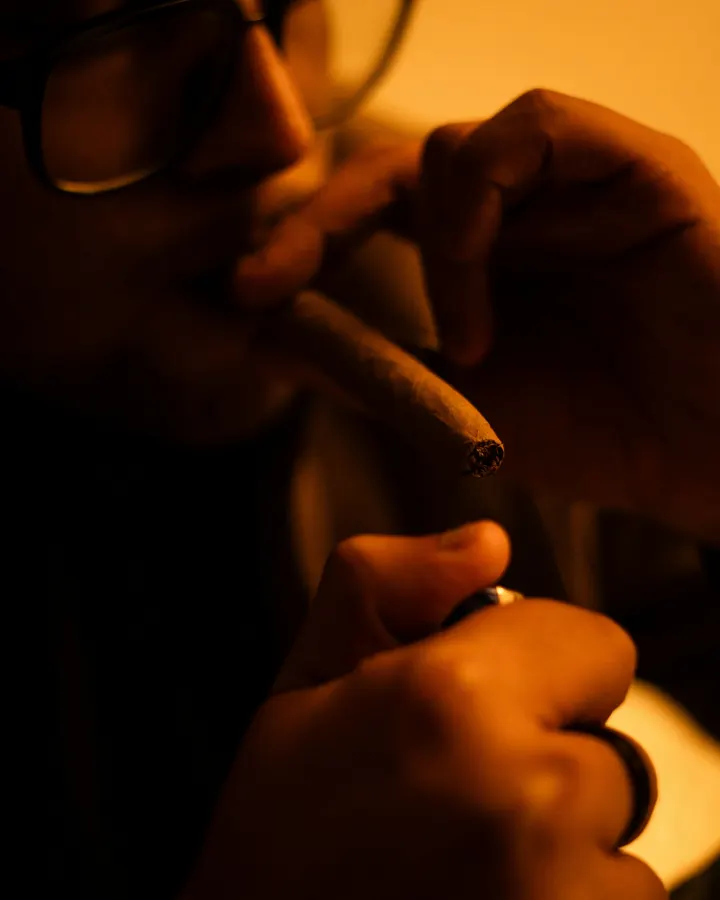
Put it to your lips and draw gently while you turn it over the flame. A torch or butane lighter keeps the flavor clean.
- ⏳
Sip, don’t inhale
Draw the smoke into your mouth, taste it, let it go. About one puff a minute keeps it cool and flavorful.
- 🌫️
Let the ash be
A good ash holds for an inch or more. Let it fall on its own or roll it off gently — no need to tap.
- 🌙
Let it rest
When you’re done, set it in the ashtray. It will go out on its own — no need to stub it.
06 · Storage
Keep them happy at home.
Cigars are living leaf. Too dry and they crack and burn hot; too humid and they won’t draw. A humidor keeps them just right.
No humidor yet? A sealed bag with a two-way humidity pack keeps a few cigars fresh for weeks. We carry both.
07 · Pairings
What to sip alongside.
Match weight with weight: mild cigars with lighter drinks, bold cigars with richer ones.
The classic morning match — great with maduros and mild Connecticuts alike.
Caramel and vanilla that love a Dominican cigar.
Sweet oak for medium-to-full Nicaraguans.
Rich and nutty — made for a slow maduro.
Not drinking? Sparkling water resets your palate between puffs, and cola or sweet tea pair surprisingly well.
08 · Glossary
Talk like a regular.
- Puro
- A cigar made entirely from tobacco grown in one country — and half of our name.
- Vitola
- A cigar’s size and shape. “What vitola is that?” means “what size?”
- Ring gauge
- Diameter in 64ths of an inch. A 64 ring is one inch across; a 50 is a little over ¾.
- Figurado
- Any shape that isn’t a straight cylinder: torpedo, belicoso, perfecto.
- Long filler
- Whole leaves running the length of the cigar — the mark of a premium, hand-rolled smoke.
- Short filler
- Chopped leaf, common in machine-made cigars. Burns faster and hotter.
- Habano
- Wrapper grown from Cuban-seed tobacco outside Cuba, known for spice and richness.
- Corojo
- A Cuban-seed variety prized for pepper and spice, widely grown in Honduras and Nicaragua.
- Connecticut shade
- Wrapper grown under cheesecloth tents to stay smooth, pale and mild.
- Box-pressed
- Pressed into a squared-off shape. Many smokers find it more comfortable in the hand.
- Tercio
- One third of a cigar. Good blends change in flavor from the first tercio to the last.
- Draw
- How easily air pulls through. Too tight or too loose and the flavor suffers.
- Retrohale
- Letting a little smoke out through the nose to pick up more aroma. Go easy at first.
- Canoeing
- When one side burns faster than the other. A quick touch-up with the lighter fixes it.
- Plume
- Fine white crystals of natural oils that can appear on aged cigars. Unlike mold, it brushes right off.
- Cedar spill
- A thin strip of Spanish cedar used to light a cigar — a traditional, clean flame.
Ready?
The best lesson is a good cigar.
Come by, tell us what you like, and we’ll hand you something great to start with.