The first smokers
Long before Europeans arrived, the Taíno and other peoples of the Caribbean grew tobacco, rolled its leaves and smoked them — in ceremony, as medicine and for pleasure. Europe’s word tobacco is usually traced back to the Caribbean.

Our site is about premium cigars. Please confirm you are 21 or older to enter.
Home / History
The story
Every cigar in our humidor carries a story that starts in the Caribbean more than 500 years ago and runs through Seville, Havana, Tampa and the hills of Nicaragua. Here it is, one era at a time.
Long before Europeans arrived, the Taíno and other peoples of the Caribbean grew tobacco, rolled its leaves and smoked them — in ceremony, as medicine and for pleasure. Europe’s word tobacco is usually traced back to the Caribbean.
In Cuba, two of Columbus’s men — Rodrigo de Jerez and Luis de Torres — watched villagers smoke rolled leaves. De Jerez is often called the first European smoker; back in Spain, the story goes, the habit got him in trouble with the Inquisition.
Spanish and Portuguese ships carried the leaf home. The French diplomat Jean Nicot sent tobacco to the royal court in Paris — and lent his name to nicotine.
Spain turned tobacco into an industry. Seville’s Royal Tobacco Factory grew into one of the largest buildings in Europe, and its cigar makers later inspired Bizet’s opera Carmen.
Spain lifted its tobacco monopoly and Cuba took off. Leaf from the Vuelta Abajo region made “Havana” the world’s byword for a fine cigar, and houses like H. Upmann (1844) and Partagás (1845) opened their doors.
In Cuban factories, a reader sat above the rolling tables reading newspapers and novels aloud while the torcedores worked. Montecristo is said to take its name from a rollers’ favorite: The Count of Monte Cristo.
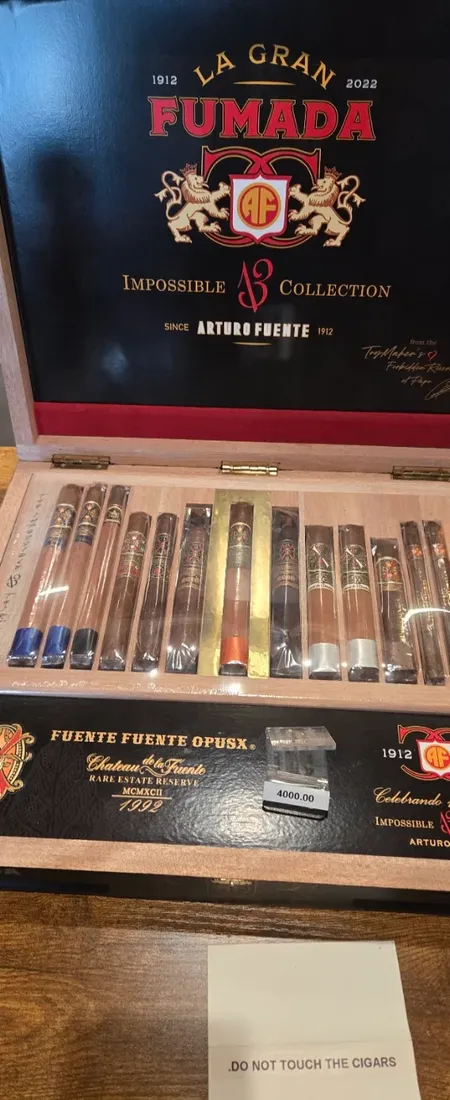
Vicente Martínez Ybor moved his factory from Key West to Tampa, and Ybor City grew into America’s “Cigar City,” with dozens of factories and thousands of rollers. In 1912 a young Cuban immigrant, Arturo Fuente, opened his first shop in West Tampa.
The U.S. embargo on Cuba cut Havana cigars off from American smokers overnight.
The famous story: before signing it, President Kennedy asked his press secretary Pierre Salinger to round up his favorite H. Upmann Petit Upmanns. Salinger came back with 1,200.Cuban cigar families carried their seed, skill and names to Miami, the Dominican Republic, Nicaragua and Honduras. José Orlando Padrón founded Padrón Cigars in Miami in 1964, and in 1980 the Fuente family moved its production to the Dominican Republic.
Cigar Aficionado launched and cigars became a celebration. Demand exploded, lounges opened across the country and a new wave of boutique blenders was born.
Nicaragua, the Dominican Republic and Honduras now roll most of the premium cigars smoked in America, blending leaf from Ecuador, Connecticut, Mexico, Cameroon and beyond. There have never been more great cigars to choose from.
Puro Humo — “pure smoke” — began in 2006 and opened its lounge at 362 W Colorado St in 2016, adding a Glendale chapter to a five-hundred-year story.
Why it matters
Cuban-seed tobacco grown in Nicaragua, Connecticut shade wrappers, Dominican blending traditions — the flavors in a modern cigar are the story above, rolled into one.
Ask the counter for a Dominican classic, a bold Nicaraguan and a Connecticut-wrapped smoke side by side — you’ll taste three chapters of this page.